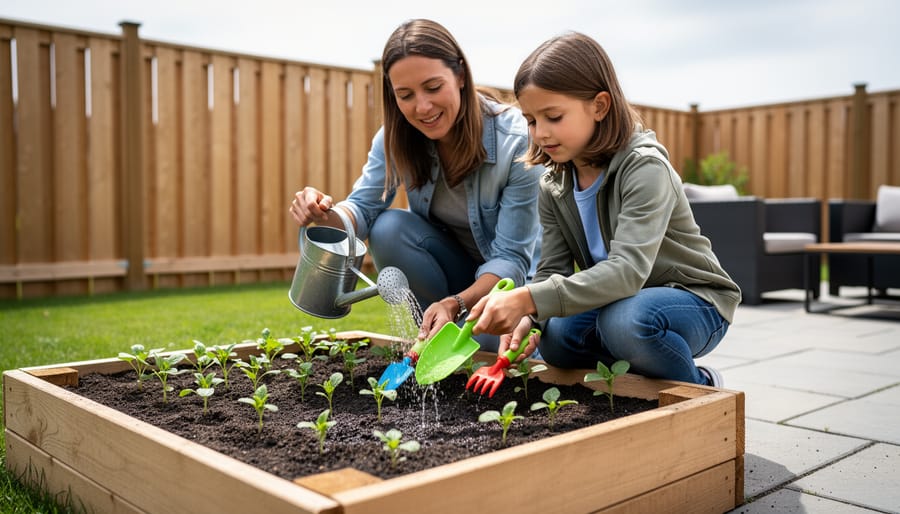
Starting a garden with kids takes about an afternoon of setup and one simple rule: keep it small, safe, and fast to reward. A raised bed of roughly four by four feet, filled with quality soil and planted with quick growers like radishes, lettuce, and sunflowers, gives children visible results within weeks and keeps the workload manageable for adults. Beginner difficulty, no special skills required.
Why does this work? Kids stay engaged when they can see change. Radishes can be ready in as little as 25 to 30 days, which suits a child’s sense of time far better than a tomato that takes months. A compact bed also keeps every plant within arm’s reach, so little hands can water, weed, and harvest without stepping on the soil.
Good design matters here too. Think of the garden as a small living artwork: bold colour from nasturtiums, height from sunflowers, texture from herbs. Pair that creative thinking with sound science, such as proper sun exposure, well-draining soil, and child-safe plant choices, and you get a space that teaches as much as it delights. The steps below show you how to build it, from tools to first harvest.
Gather the Right Tools and Materials for Small Hands
Choosing Tools and Containers That Fit Children
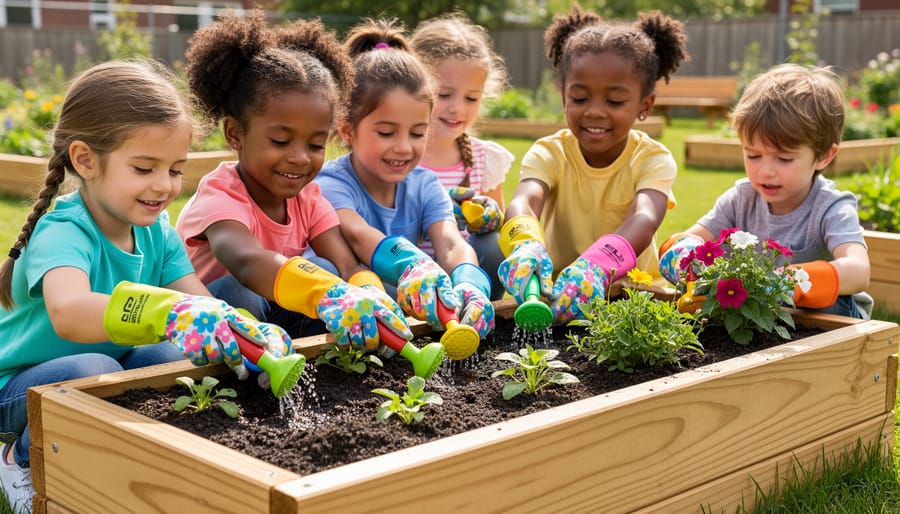
Kid-sized tools matter more than most families expect. Look for short handles, light heads and rounded edges, because small hands tire quickly and a heavy adult trowel makes digging frustrating. Research from university extension specialists shows that handles affect comfort and control, which is even truer for children.
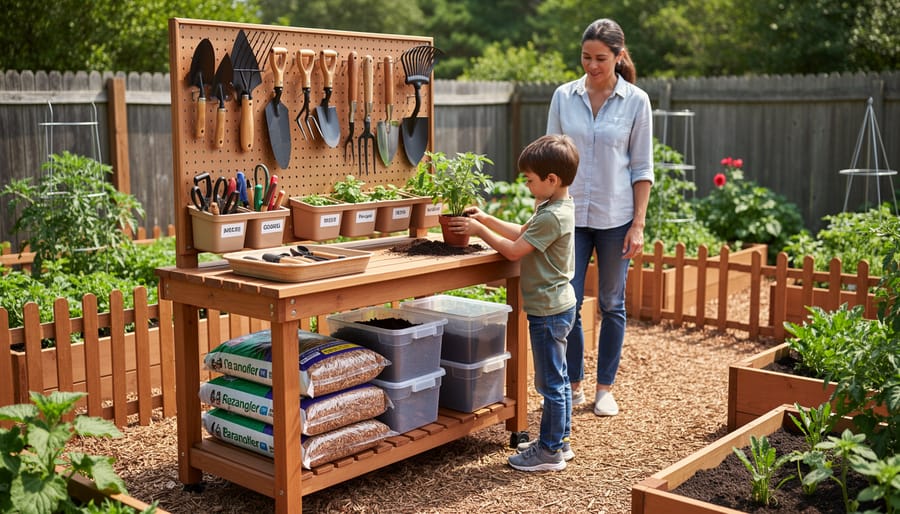
Here is a simple checklist to gather before planting:
- Lightweight hand trowel with a rounded tip
- Child-sized gloves that fit snugly
- Watering can with a gentle rose
- Raised bed or containers with drainage holes
- Certified clean topsoil or quality garden mix
- Fast-germinating seeds or starter plants
- Plant markers for naming each row
- Sun hat and water bottle
Containers deserve equal thought. Raised beds keep soil loose, drain well and spare small backs, while large pots suit patios and balconies. In-ground plots cost less but can hold water in heavy clay. If you are unsure which suits your yard, landscape design help can match the layout to your space and drainage.
Selecting Soil and Seeds That Succeed Quickly
Good soil does half the work for a young gardener. A light, well-draining garden mix gives roots room to breathe and holds moisture evenly, so seedlings emerge on schedule instead of sulking in heavy clay. For seed starting, a fine, airy blend works best, and the seed-starting mix formula from university extension specialists is a helpful reference if you’d like to understand what goes into a good one.
Seeds matter just as much, because children need results they can see. Choose varieties that sprout fast and forgive small mistakes. Bush beans and sunflowers push up sturdy, easy-to-handle seedlings, and leaf lettuce can be snipped within weeks. Radishes are the classic pick since the radish is fast-maturing crop that rewards patience in about a month.
That speed counts across Canada, where the growing season is shorter and a long wait can drain a child’s enthusiasm. Check your local last-frost date before sowing, and stagger plantings so there’s always something new to watch.
Safety Warnings: Protecting Young Gardeners and Visitors
Plants and Products to Keep Out of Reach
Many popular ornamentals look harmless but are poisonous if chewed or swallowed. Foxglove, lily of the valley, daffodil bulbs, yew and monkshood are common culprits, and brightly coloured berries such as those on holly or baneberry are especially tempting to small children. If you cannot name a plant with certainty, treat it as unsafe and remove it from the play area. Your local poison control centre or a provincial plant toxicity list can confirm what is safe.
Synthetic fertilizers, herbicides and pesticides are best left out of a kids’ garden entirely, since children touch soil, handle plants and put hands near their mouths. Instead, feed beds with finished compost, use mulch to suppress weeds and pick off pests by hand. If you are also thinking about family pets, the same principles apply, and our guide to pet-friendly landscaping offers more ideas for choosing non-toxic plants that stay beautiful.
Sun, Tools and Supervision Habits
Start with the sun. Plan garden sessions for morning or late afternoon, and have children wear a wide-brimmed hat, sunscreen and light, breathable clothing. Keep a water bottle at the edge of the bed and schedule shade breaks, since small gardeners often forget to drink when they are absorbed in digging.
Set simple tool rules before anyone picks up a trowel. Tools stay on the ground or in a bucket when not in use, children walk instead of run while carrying them, and sharp or long-handled items stay with an adult. A good guide is close, hands-on supervision for ages two to five, an adult within sight and earshot for ages six to nine, and periodic check-ins for older children once they have shown they can handle tools responsibly.
Clear boundaries help everyone relax. A low fence, a row of stones or a defined bed edge tells children where the garden begins and ends and keeps them away from driveways and water features. If pets share the yard, choosing dog-friendly materials for borders and paths keeps the whole space safer for young gardeners and animals alike.
Step-by-Step: Building Your Child-Friendly Garden
Planning the Space With Sun, Access and Beauty in Mind
Start with the light. Most vegetables and sunflowers need six to eight hours of direct sun, so watch your yard through a typical day and note where it falls. Check drainage too: after heavy rain, a spot where water pools for hours will drown young roots. Then keep the plot small. A bed about one metre by one metre lets a child reach the centre without stepping on the soil, and it’s far less likely to feel like a chore.
Design matters as much as science. Mix bold colour (orange marigolds, yellow sunflowers), soft textures like lamb’s ear, and varied height so tall plants frame shorter ones. A garden that looks good will draw adults in as well, and that’s how a weekend project becomes a family habit. If you’d like a more polished layout, custom landscaping can shape the space around your property and your kids.
- Choose a sunny, sheltered spot that you can see from a window or patio.
- Define the space with a raised bed or a clear border so children know where to dig.
- Loosen the soil and mix in compost before planting.
- Let children help choose the plants, so they feel invested from day one.
- Plant at the depth and spacing shown on each seed packet.
- Water gently with a small can, then add labels they can decorate.
- Set a simple weekly routine for watering, weeding and checking growth.
- Add sensory or play elements, such as a stepping stone path or a scented herb corner.
Once the plan is in place, planting becomes much easier.
Planting and Care Routines Kids Can Follow
Kids stay interested when their jobs match what their hands and attention spans can handle. Toddlers and preschoolers do well with big, tactile tasks: pressing large seeds like beans or sunflowers into pre-made holes, and filling a small watering can for a gentle shower. Early elementary children can handle sowing at the right depth, thinning seedlings and pulling obvious weeds. Older kids can take on spacing, labelling rows, keeping a simple growth journal and harvesting on their own.
Short, regular routines work better than long weekend sessions. Ten minutes after school or before dinner is plenty. A simple rhythm keeps things predictable: water when the top two centimetres of soil feel dry, check for new growth, then pull any weeds while they’re small and easy to lift. Teach kids to water at the base of the plant rather than soaking the leaves, which is better for plant health and gives the job a clear technique to master.
Give each child one plant or one row that is truly theirs. Ownership builds confidence, and a quick-sprouting crop like radishes delivers a visible win within weeks. When harvest time arrives, let them pick, rinse and taste their own produce. That small moment of pride is often what turns a one-time project into a habit that carries through the whole Canadian growing season.
Plant Choices That Delight the Senses and Stay Safe
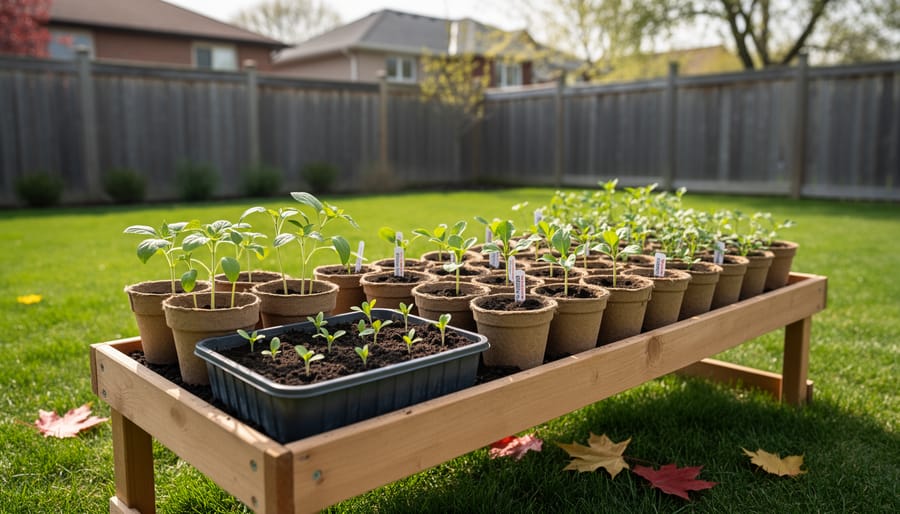
Choosing plants by purpose helps children see what each one is for, and it keeps the garden both lively and low-risk. Here is a practical starter selection, grouped by the experience each plant offers.
Plants to eat: Radishes, leaf lettuce and snap peas sprout quickly and are forgiving of small mistakes. Cherry tomatoes and strawberries reward patience with fruit kids can pick themselves, while herbs such as mint and chives add flavour and fragrance.
Plants to touch and smell: Lamb’s ear has soft, velvety leaves, and lavender and lemon balm release a scent when gently brushed. Chamomile, with its small daisy-like flowers, adds an apple-like fragrance.
Plants for colour and height: Sunflowers, zinnias, nasturtiums and marigolds are cheerful, easy to start from seed and simple for small hands to handle. Sunflowers in particular make a dramatic “living fort” or backdrop along a fence line.
Plants that attract wildlife: Bee balm and coneflower draw pollinators, giving children something to observe up close.
Suitability depends on your hardiness zone and local frost dates, so check Natural Resources Canada’s plant hardiness zone map and your regional planting calendar before buying. Some of these, like tomatoes and zinnias, are tender annuals that need to wait until the risk of frost has passed.
Finally, confirm the identity and toxicity of every plant with a trusted source, such as your local garden centre or extension service, before it goes into a child’s garden.
Verify Your Setup and Plan the Next Season
Once the beds are planted, take ten minutes for a walk-through at a child’s eye level. Check that borders, fencing or edging clearly mark the growing space, that tools are stored out of reach, and that nothing toxic has crept in from neighbouring beds. Confirm the soil drains rather than pooling, and that shade or a sun hat is available for the sunniest part of the day.
Then look at the plants themselves. Healthy growth shows as firm, evenly coloured leaves, new shoots within one to two weeks of sowing for quick crops like radishes, and soil that is damp but not soggy. If seedlings are pale and leggy, they likely need more sun. Yellowing leaves with wet soil usually point to overwatering, while wilting in dry soil calls for deeper, more regular watering. Thin crowded seedlings and replant gaps rather than starting over, since small adjustments are part of the lesson.
When the routines feel natural, consider next steps: adding a second bed, installing fencing for a clearly defined play-safe boundary, or building a decking area for seating and harvesting. For a custom design that balances beauty with safety, or for ongoing maintenance, a local landscape professional can help you plan the next season with confidence.
Frequently Asked Questions About Gardening With Kids
Gardening with children raises a handful of practical questions, and the answers below keep things simple and realistic.
What age can children start gardening?
Toddlers can join in with simple jobs such as pressing seeds into soil or watering with a small can, as long as an adult stays close. Older children can take on sowing, weeding and harvesting with more independence.
How do I garden with kids in a small yard or on a balcony?
Large containers, window boxes and a single compact raised bed give children a space of their own without crowding yours. Choose quick, forgiving plants like lettuce or radishes, and place pots where little hands can reach them safely.
Do I need a raised bed?
No, but a raised bed can make a child-sized plot easier to reach and define. Containers or a small in-ground patch work just as well if the soil drains properly and gets enough sun.
How do I keep children interested through the Canadian season?
Give each child a short, regular job and a plant with a fast reward, then add something new as the weeks pass. Sunflowers, beans and a small harvest basket keep the experience tangible when summers are short.
Organic methods are not strictly required, though keeping synthetic chemicals out of a kids’ garden is a sensible, low-risk habit. Compost, quality garden mix and hand weeding achieve plenty without introducing products you would want to keep out of reach.
If interest fades, shrink the task rather than abandon the garden. Ten minutes of watering or a quick look for new sprouts is often enough to bring a child back, and a themed corner or a favourite colour can renew the spark.
Child-friendly gardening practices come down to a handful of dependable habits: choose safe plants, give small hands tools that fit, mark out a defined space and supervise with patience. Together, they turn an ordinary patch of yard into a place where children learn how soil, water and sunlight produce something they can taste and share. Every seed they sow teaches observation, responsibility and a little resilience.
You don’t need a grand plan to begin. Start with a single small bed or one large container, plant radishes or sunflowers, and let your young gardener lead the daily watering. Confidence grows along with the seedlings, and the garden can expand naturally as interest does.
For families who want a polished, long-lasting result, JRALA Landscape Company can help with custom design, fencing, decking and ongoing maintenance, so the space looks beautiful and stays safe season after season.