
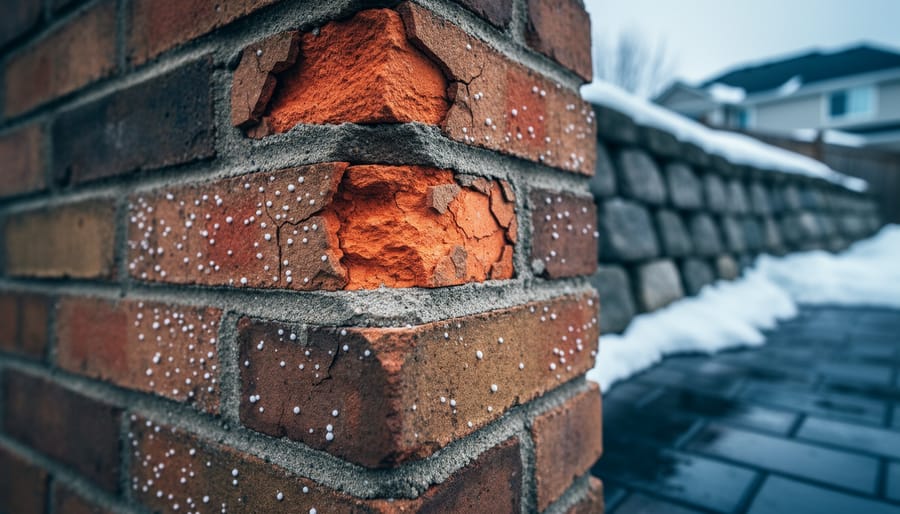
Inspect your masonry structures twice annually, in early spring and late fall, to catch deterioration before minor cracks expand into structural failures. Canada’s freeze-thaw cycles create unique challenges for both chimneys and landscape masonry. Water penetrates small gaps, freezes, expands, and progressively fractures mortar joints and brickwork. A hairline crack visible in September can become a gaping void by March.
Prioritize repairs based on safety and water exposure. Chimney damage poses immediate fire and carbon monoxide risks, while deteriorating retaining walls threaten landscape stability and property drainage. Look for efflorescence (white, powdery deposits), spalling brick faces, stepped cracking patterns, and leaning structures. These symptoms indicate progressive moisture damage requiring professional intervention.
Canadian homeowners face a critical decision point when deterioration exceeds 20% of a structure’s surface area. Isolated mortar joint failures respond well to repointing, where damaged mortar is carefully removed and replaced with properly matched compound. Extensive brick spalling, structural shifting, or foundational movement typically necessitates partial or complete rebuilds. The distinction matters: attempting superficial repairs on fundamentally compromised structures wastes resources and delays inevitable reconstruction.
Professional Mason Chimney Repair services combine structural engineering principles with architectural sensitivity. Proper masonry restoration requires matching historical brick composition, selecting mortar with appropriate lime content and compressive strength, and integrating repairs seamlessly with existing aesthetics. Scientific precision ensures structural integrity, while artistic integration preserves your property’s visual coherence and value.
Why Masonry Deteriorates in Canadian Climates
The Freeze-Thaw Cycle’s Hidden Damage
Water infiltration represents the primary catalyst for masonry deterioration in Canadian climates. Porous materials like brick, stone, and mortar absorb moisture through hairline cracks, compromised mortar joints, and the natural porosity of the materials themselves. This absorbed water becomes destructive when temperatures drop below freezing.
The physics of the freeze-thaw cycle creates relentless damage. Water expands approximately nine percent when it freezes, generating pressures that exceed 3,000 pounds per square inch within confined spaces. This expansion forces cracks to widen and pushes mortar from joints. As temperatures rise, the ice melts and retreats deeper into newly enlarged voids. The next freeze cycle drives the process further.
The damage compounds with each seasonal transition. A microscopic crack in a chimney crown becomes a quarter-inch gap after one winter. Within three freeze-thaw seasons, that same gap can compromise the structural integrity of the entire chimney. Landscape features like retaining walls and stone pillars experience identical deterioration patterns, though horizontal surfaces accumulate water faster than vertical ones.
Scientific precision in identifying this damage requires understanding the progressive nature of the cycle. Surface spalling, where the outer layer of brick or stone flakes away, signals advanced deterioration. White crystalline deposits indicate water movement through the masonry. Bulging sections reveal internal expansion pressure already compromising structural stability.
Canadian properties experience between 40 and 100 freeze-thaw cycles annually depending on regional climate, creating an aggressive environment that demands proactive assessment and timely intervention to prevent cascading failure.
Mortar Joint Failure: The First Warning Sign
Mortar functions as the sacrificial component in masonry construction. By design, it’s softer and more porous than the bricks or stones it binds together. This intentional engineering principle allows mortar to absorb the stress of freeze-thaw cycles, thermal expansion, and settling movements that would otherwise crack the harder masonry units.
In Canadian climates, mortar deteriorates predictably. Winter moisture penetrates the microscopic pores in aging mortar joints. As temperatures drop below freezing, that moisture expands by approximately nine percent. This expansion creates progressive cracking and crumbling from within. Over successive freeze-thaw cycles, mortar transforms from a weather-tight barrier into a network of entry points.
The deterioration pattern typically begins at horizontal joints where water naturally collects. You’ll notice sandy texture when you brush the surface, or small fragments falling away. Once compromised, these joints channel moisture directly to the brick-mortar interface and into the masonry core. Water that enters through failed mortar joints saturates the surrounding materials, accelerating deterioration exponentially. What begins as surface erosion quickly becomes structural compromise, affecting the chimney’s stability and the surrounding landscape masonry elements that share similar construction principles.
Identifying Critical Damage Before It’s Too Late
Chimney-Specific Warning Signs
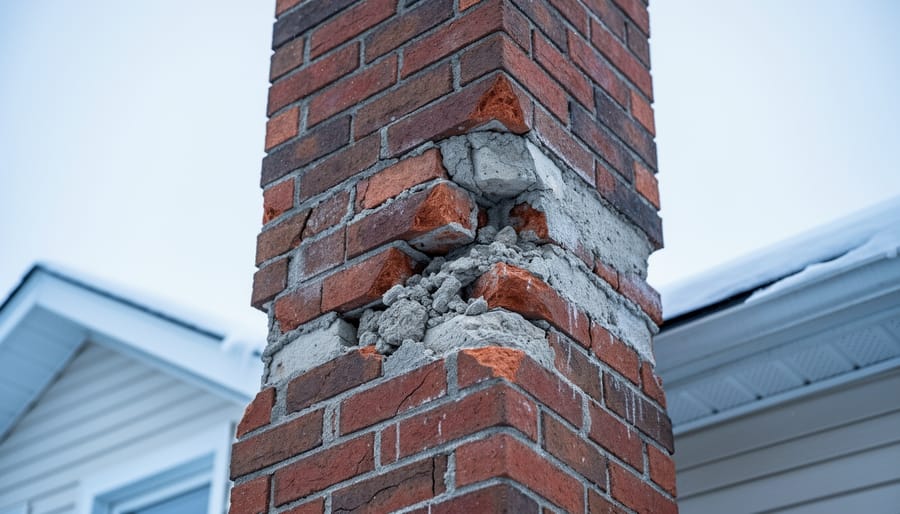
Chimneys face distinct structural challenges that set them apart from other masonry features on your property. Their vertical exposure and constant thermal cycling create unique failure patterns that demand immediate attention.
The chimney crown serves as your first line of defense against water infiltration. This concrete or mortar cap at the top of your chimney should maintain a sloped surface with proper overhangs. When cracks appear in the crown, water penetrates during rainfall and freezes within the masonry during Canadian winters. This freeze-thaw action accelerates exponentially, transforming hairline cracks into significant structural compromises within a single season. Look for pieces of concrete or mortar at the base of your chimney, a telltale sign of crown deterioration.
Flashing separation represents another critical warning sign. The metal interface between your chimney and roofline must remain watertight. When you notice gaps, rust stains, or lifted edges where metal meets masonry, water is already entering your home’s structure. This infiltration rarely announces itself immediately at the roofline. Instead, the damage manifests through interior water stains on walls adjacent to the chimney, often appearing first in upper-floor rooms or attics.
White crystalline deposits on exterior chimney surfaces, known as efflorescence, indicate active moisture migration through the masonry. While this appears purely cosmetic, it signals that water is moving through your chimney structure, carrying dissolved salts to the surface. The scientific precision required to diagnose these interconnected issues explains why professional assessment becomes essential before deterioration compromises both structural integrity and your home’s interior finishes.
Landscape Masonry Red Flags
Landscape masonry structures enhance outdoor living spaces while serving essential functional purposes, but they’re exposed to relentless freeze-thaw cycles and moisture penetration that accelerate deterioration. Recognizing early warning signs prevents catastrophic failure and costly emergency repairs.
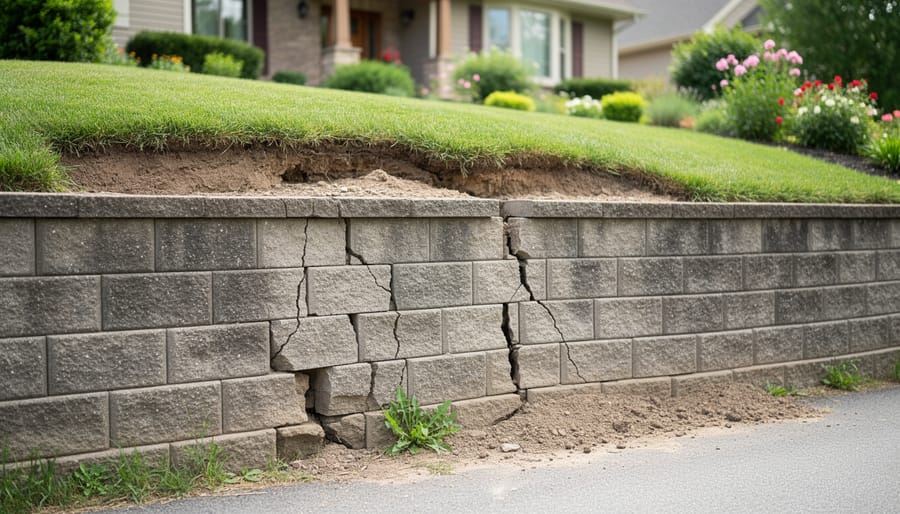
Retaining walls show distress through outward bowing or bulging, indicating soil pressure has exceeded the wall’s structural capacity. Even a slight curve of 2-3 centimeters signals compromised stability. Look for horizontal cracks running along mortar joints or through individual stones and bricks. Separation from adjoining structures, such as gaps forming between a retaining wall and adjacent steps or patio, reveals foundation movement or inadequate tie-in during original construction.
Garden walls and pillars develop vertical cracks that widen at the top, showing differential settlement where one section sinks faster than another. Leaning pillars appear stable until they reach critical angles. Check plumb with a level annually. White chalky deposits, called efflorescence, indicate water moving through the masonry and dissolving salts. This moisture migration weakens mortar bonds over winter.
Drainage failures manifest as water pooling behind retaining walls, saturated soil at wall bases, or ice buildup during winter months. Properly designed walls include weep holes and gravel backfill. Blocked or absent drainage systems create hydrostatic pressure that pushes walls outward.
Outdoor fireplaces present unique concerns. Inspect for deteriorating firebrick, crumbling mortar in the firebox, and separation between the chimney and main structure. Horizontal cracks near the roofline suggest the chimney lacks proper reinforcement or has settled independently from the base.
Loose or missing capstones expose the wall core to water infiltration. Once moisture penetrates, freeze-thaw damage accelerates exponentially. Stone veneer pulling away from backing walls, particularly at corners, indicates failed attachment systems or water damage to underlying materials.
The Artistic and Scientific Approach to Masonry Restoration
Professional masonry restoration requires equal parts engineering expertise and artistic vision. The challenge lies not simply in repairing damage, but in recreating work that often dates back decades or even a century. Each repair must honor the original craftsmanship while employing modern materials and techniques that ensure long-term durability.
The scientific foundation begins with thorough structural assessment. Professionals analyze mortar composition, brick absorption rates, and the extent of moisture infiltration. This technical evaluation determines which materials will perform best in your specific conditions. Different mortar mixes have varying compressive strengths and flexibility ratings. Using inappropriate materials creates stress points that accelerate future deterioration, particularly during Canadian freeze-thaw cycles.
The artistic dimension becomes crucial during the visible repair work. Skilled masons study the existing mortar’s color, texture, and tooling patterns. They observe how original bricklayers shaped their joints and positioned each course. Matching these details requires trained observation and practiced hands. The goal is creating repairs that disappear into the original structure rather than announcing themselves as obvious patches.
Color matching presents particular complexity. Mortar undergoes weathering and color shifts over time. A fresh mix matching today’s appearance will look drastically different in five years. Experienced professionals account for this aging process, adjusting pigments to ensure future compatibility rather than just immediate similarity.
This dual approach extends to landscape masonry features. Garden walls, outdoor fireplaces, and retaining walls demand the same careful balance. The repair must provide structural integrity while maintaining the aesthetic character that defines your property’s landscape design.
The most successful restorations become invisible. Neighbors and visitors see only a well-maintained structure, unaware that significant repair work has occurred. This seamless integration represents the highest standard in professional masonry restoration, where technical soundness and visual harmony work together to extend your structure’s life for generations.
Professional Chimney Masonry Repair Techniques
Tuckpointing and Repointing Explained
While often used interchangeably, tuckpointing and repointing represent distinct masonry restoration techniques with specific applications. Understanding the difference ensures you select the appropriate method for your chimney’s condition.
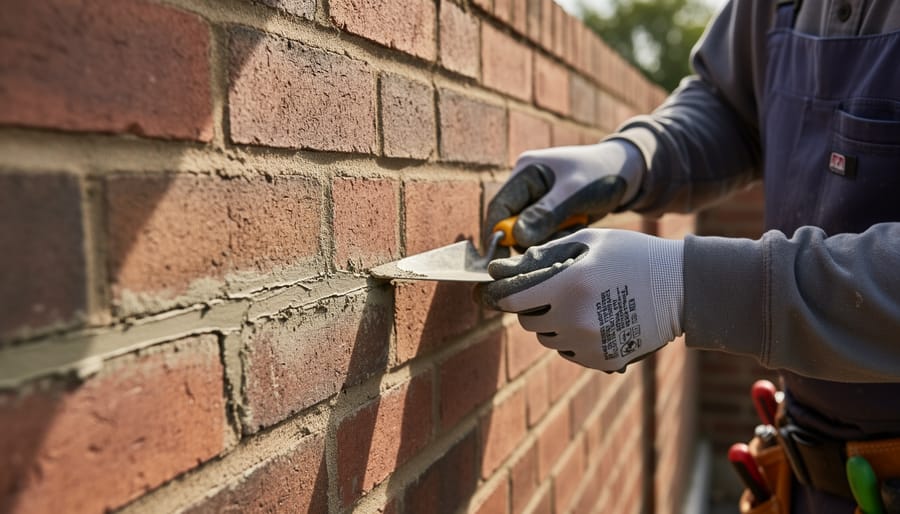
Repointing addresses structural integrity by removing deteriorated mortar joints and replacing them with fresh mortar matched to the original composition. This technique becomes necessary when mortar has eroded, cracked, or loosened due to freeze-thaw cycles common throughout Canadian winters. The process restores weather resistance and structural stability without altering the visual appearance of your chimney. Most restoration projects requiring functional repair involve repointing.
Tuckpointing combines both structural and aesthetic considerations. After repointing the joints with mortar matched to the brick color, a thin line of contrasting mortar is applied in the center of each joint. This creates crisp, defined lines that enhance visual appeal while maintaining protection. The technique originated in 18th-century England to mimic fine ashlar masonry and remains valuable for heritage properties or situations where you want to emphasize architectural detail.
Your chimney typically needs repointing if mortar has receded more than 6mm from the brick face or shows significant cracking. Tuckpointing suits projects where decorative enhancement complements structural repair, particularly for front-facing chimneys or heritage restorations where architectural character matters.
Both techniques demand scientific precision in mortar formulation. Using mortar harder than the surrounding brick causes damage, as the brick absorbs stress and moisture that should dissipate through softer mortar joints.
Chimney Crown and Cap Restoration
The chimney crown serves as your masonry structure’s primary defense against water penetration, sitting exposed at the top of the chimney where it faces the harshest elements. This horizontal concrete surface slopes away from the flue opening to shed rain and snow, preventing moisture from seeping into the masonry below. In Canadian climates, crowns endure freeze-thaw cycles that create microscopic cracks which expand over time, allowing water intrusion that compromises the entire chimney system.
Professional crown restoration begins with thorough damage assessment. Minor surface cracks measuring less than 3mm wide typically respond well to specialized crown sealers designed for thermal expansion. These elastomeric coatings flex with temperature variations while providing waterproof protection. Deeper fissures or sections showing spalling require partial reconstruction. We remove deteriorated concrete to sound material, then rebuild using modified Portland cement mixes with proper aggregate ratios and water-reducing admixtures that enhance durability.
The crown repair must include correct geometry. A minimum 2-inch overhang beyond the chimney face creates a drip edge that directs water away from vertical surfaces. Slope design should fall between 1:12 and 2:12 to ensure effective drainage without being too steep for proper finishing.
Cap installation completes crown protection. Quality chimney caps prevent rain entry while maintaining proper ventilation and blocking wildlife access. Stainless steel or copper caps resist corrosion from acidic flue gases and outlast galvanized alternatives. The artistic integration of cap style with your home’s architecture transforms a functional component into a refined design element that enhances curb appeal while delivering scientific precision in moisture management.
Landscape Masonry Restoration Methods
Retaining Wall Stabilization
Retaining walls fail through a predictable sequence of structural compromises. Water infiltration saturates the soil behind the wall, creating hydrostatic pressure that exceeds the design load. Freeze-thaw cycles amplify this pressure in Canadian climates, causing incremental displacement. Once the wall tilts beyond three degrees from vertical, progressive failure accelerates.
Professional stabilization begins with comprehensive drainage assessment. We install French drains at the wall’s base and weeper holes through the structure to redirect groundwater away from the backfill. Without proper drainage, even rebuilt walls will eventually succumb to the same hydraulic forces. The soil composition behind the wall determines whether geotextile reinforcement is required to prevent further erosion.
For walls showing early-stage tilt, helical anchors provide lateral reinforcement without complete reconstruction. These steel tie-backs extend deep into stable soil, creating tensile resistance against forward movement. We measure anchor placement using soil compaction data and wall height ratios to ensure adequate load distribution.
Severe structural failure requires strategic rebuilding. Unlike basic garden walls load-bearing retaining structures demand engineered foundations extending below frost depth. We excavate to undisturbed soil, install compacted granular base layers, and reconstruct using interlocking techniques that accommodate thermal movement while maintaining structural integrity.
The distinction between repair and replacement depends on quantifiable measurements: walls leaning more than six inches at the top, visible foundation separation, or deteriorated materials compromising more than forty percent of the structure typically warrant complete rebuilding rather than supplemental reinforcement.
Matching Historic and Existing Masonry
Achieving invisible repairs requires both detective work and artistic skill. The challenge begins with identifying the original materials: brick composition, mortar mix ratios, and finish techniques that may date back decades or even a century. Heritage chimneys often feature handmade bricks with unique firing patterns and colour variations impossible to replicate with modern mass-produced units.
Professional masons must source materials that match not just colour but texture, size, and weathering patterns. This sometimes means searching architectural salvage yards or working with specialty suppliers who can custom-mix mortars to match historical formulations. The mortar analysis alone reveals crucial details about lime content, sand grain size, and aggregate composition.
The craftsmanship component presents equal complexity. Original stonemasons employed techniques specific to their era, from tooling patterns to jointing methods. Replicating these details requires trained eyes and hands that understand period construction practices. A poorly matched repair stands out immediately, disrupting the visual harmony of your property and potentially affecting value.
For landscape masonry, matching extends beyond the structure itself. Repaired pillars or walls must integrate with surrounding elements like landscape lighting features and hardscaping. This holistic approach ensures repairs enhance rather than compromise your outdoor aesthetic.
Modern restoration also incorporates eco-friendly solutions where appropriate, using breathable lime mortars that allow historic masonry to function as originally designed while meeting current performance standards. The intersection of preservation science and artistic sensitivity produces repairs that honour original construction while ensuring structural longevity.
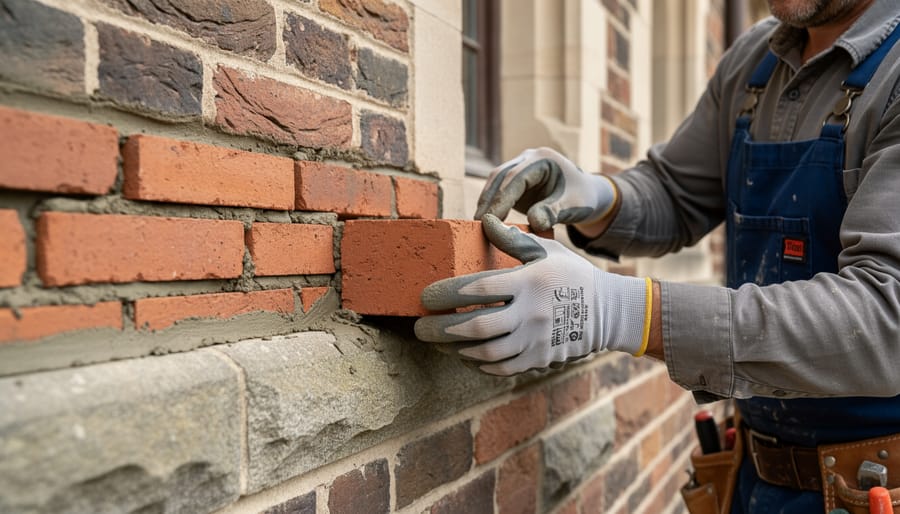
When to Repair vs. When to Rebuild
Understanding whether to repair or rebuild masonry structures requires careful assessment of several critical factors. The decision hinges on structural integrity, extent of damage, and the long-term investment value of your property.
For chimneys, surface-level deterioration like minor mortar degradation or isolated brick spalling typically responds well to targeted repairs. These interventions preserve the existing structure while addressing cosmetic and minor functional issues. However, if your chimney exhibits extensive cracking through multiple courses, leaning more than two centimeters from vertical, or shows signs of foundation settlement, complete reconstruction becomes the safer and more economical long-term solution. Structural compromise in chimneys poses safety risks that spot repairs cannot adequately resolve.
Landscape masonry follows similar principles but with different thresholds. Retaining walls showing bulging, significant displacement, or widespread deterioration across more than 30 percent of their surface area generally require rebuilding. Patios and walkways with isolated sunken sections or surface cracks may only need selective repairs and leveling. The key distinction lies in whether the foundation and structural base remain sound.
- Repair costs typically range from 30 to 50 percent less than complete reconstruction
- Preserves original materials and maintains historical character in heritage properties
- Completed in significantly less time with minimal landscape disruption
- Extends structure lifespan by 10 to 15 years with proper maintenance
- Rebuild provides comprehensive 25 to 30 year warranty coverage versus limited repair guarantees
- New construction allows integration of modern drainage systems and reinforcement techniques
- Complete reconstruction eliminates hidden deterioration that repairs might miss
- Rebuilding offers opportunity to correct original design flaws affecting long-term performance
Cost analysis should extend beyond immediate expenses. A repair costing $2,500 today might seem attractive compared to an $8,000 rebuild, but if additional repairs become necessary within five years, the accumulated expense exceeds the reconstruction cost while providing inferior structural performance.
Scientific assessment through professional inspection reveals what surface observation cannot. Specialists use moisture meters, thermal imaging, and structural analysis to identify internal deterioration. This technical precision combined with artistic vision for matching existing materials ensures your decision balances both functional requirements and aesthetic integration. Canadian freeze-thaw cycles accelerate hidden damage, making professional evaluation essential for accurate long-term planning.
Preventing Future Masonry Damage
Protecting your masonry investment requires strategic maintenance rather than reactive repairs. Canadian winters place exceptional stress on brick and stone structures, making preventive care essential for longevity.
Waterproofing stands as your first line of defense. Professional-grade breathable sealers create a barrier against moisture infiltration while allowing trapped water vapor to escape. This scientific precision prevents the freeze-thaw cycle from destroying mortar joints and brick faces. Apply sealers every three to five years, timing applications for dry, moderate temperatures above 10°C. The molecular structure of quality sealants bonds with masonry pores without creating an impermeable film that traps moisture beneath the surface.
Drainage systems deserve equal attention. Gutters, downspouts, and grade slopes must direct water away from masonry foundations and chimneys. A simple six-inch slope away from structures prevents water accumulation that saturates brick and mortar. Check that weeping holes in cavity walls remain clear, and verify that chimney caps and flashing maintain their integrity. These details matter more than most homeowners realize.
Seasonal inspections catch minor issues before they escalate. Spring assessments reveal winter damage, while fall checks prepare structures for harsh conditions ahead. Look for efflorescence (white salt deposits indicating moisture movement), hairline cracks, loose mortar, and vegetation growth in joints. Ivy and moss appear charming but their roots destroy mortar bonds and accelerate deterioration.
Consider protective treatments beyond basic sealing. Chimney caps prevent water entry and animal intrusion while reducing downdraft issues. Cricket installations behind chimneys redirect water flow on sloped roofs. For landscape masonry, proper coping stones and capstones shed water effectively when installed with slight slopes.
Integration with comprehensive landscape maintenance creates a holistic approach. Trimming vegetation away from walls, managing soil moisture levels, and controlling drainage patterns protect both structural integrity and aesthetic appeal.
Professional assessments every five years provide expert evaluation that untrained eyes miss. Thermal imaging can reveal hidden moisture problems, while moisture meters quantify saturation levels before visible damage appears. This artistic integration of technology with traditional craftsmanship extends masonry lifespan by decades.
Masonry deterioration rarely improves on its own. Small cracks expand through freeze-thaw cycles, minor mortar erosion compounds into structural weakness, and surface-level damage penetrates deeper with each passing season. The Canadian climate accelerates these processes, making early intervention essential for both your chimney’s safety and your landscape’s longevity.
Professional assessment provides clarity that visual inspection alone cannot deliver. Experienced masons identify hidden water infiltration, diagnose foundation settlement patterns, and distinguish between cosmetic concerns and structural threats. This expertise prevents misguided DIY attempts that often mask symptoms without addressing root causes, ultimately costing more in comprehensive repairs later.
Quality chimney repair and masonry restoration protect significant investments simultaneously. A properly rebuilt chimney enhances your home’s architectural character while ensuring safe operation for decades. Restored garden walls, walkways, and outdoor features preserve the functional beauty that defines your property’s landscape identity. These aren’t separate projects but integrated elements of property stewardship.
The intersection of scientific precision and artistic integration defines superior masonry work. Understanding material properties, moisture dynamics, and thermal movement keeps structures sound. Respecting original design intent, matching historical materials, and maintaining visual harmony keeps them beautiful.
Schedule a professional masonry evaluation before minor deterioration becomes major reconstruction. Expert consultation clarifies your situation, outlines realistic solutions, and establishes priorities that align with your budget and timeline. Your property deserves the protection that comes from addressing masonry concerns with the seriousness they warrant.