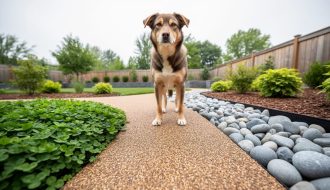
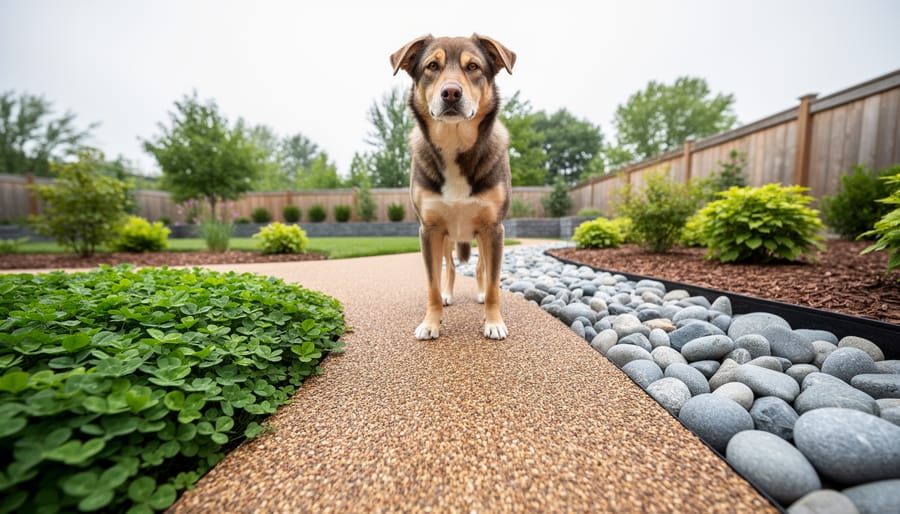
Creating a dog-friendly landscape requires selecting materials that protect your pet from toxins, physical injury, and heat stress while withstanding the wear patterns unique to active dogs. The cornerstone materials include decomposed granite with rounded edges, natural grass alternatives like clover or pet-specific synthetic turf, and smooth river rock in sizes too large to swallow (3 inches or greater). These choices eliminate common hazards like sharp gravel cuts, toxic mulch ingestion, and chemical burns from treated wood while providing comfortable surfaces for paws in Canada’s temperature extremes.
The right materials balance three critical factors: biological safety, physical durability, and thermal comfort. Wood chips from cedar or pine release phenols harmful to dogs when ingested during digging or play. Cocoa mulch contains theobromine, the same compound that makes chocolate toxic to pets. Meanwhile, dark rubber mulch and exposed concrete can reach surface temperatures exceeding 50°C during summer afternoons, causing paw pad burns within seconds.
Professional installation matters as much as material selection. Proper drainage prevents standing water that breeds parasites, while correct base preparation ensures surfaces remain level and stable under digging pressure. Edging systems contain loose materials and prevent migration into lawn areas where they become choking hazards during fetch games.
This guide provides material specifications, toxicity warnings, installation protocols, and maintenance requirements to help you build outdoor spaces where dogs thrive safely. Each recommendation accounts for Canadian climate conditions, from spring mud management to winter ice formation, ensuring year-round functionality.
Essential Dog Friendly Landscaping Materials You’ll Need
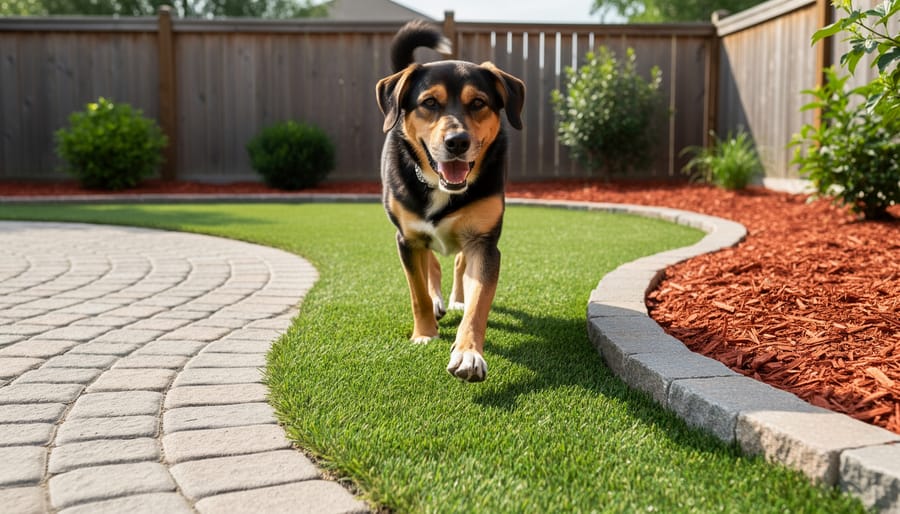
Creating a dog-friendly landscape requires selecting materials that prioritize safety without sacrificing visual appeal. The right combination prevents injuries, avoids toxicity, and withstands the wear that active dogs bring to outdoor spaces.
Ground Cover Options
Ground covers form the foundation of dog-safe yards. Decomposed granite offers excellent drainage and stays cooler than concrete under summer sun, though it compacts over time and may need replenishment. Pea gravel (rounded stones between 3/8″ and 5/8″) provides superior drainage and won’t retain heat, but requires edging to prevent migration into planting beds. Rubber mulch, made from recycled tires, cushions joints during play and doesn’t attract fleas, though some dogs try to eat it. High-quality artificial turf designed for pets includes antimicrobial backing and efficient drainage systems that handle urine without odor buildup.
Hardscaping Materials
For pathways and patios, choose materials with textured surfaces that prevent slipping when wet. Flagstone and slate provide natural traction and remain comfortable under paws in most weather. Concrete pavers work well if you select varieties with brushed or textured finishes rather than polished surfaces. Avoid sharp-edged crushed rock and any material small enough for dogs to swallow.
Safe Mulches and Edging
Cedar and pine bark mulches repel insects naturally without chemical treatments, though you’ll want pieces large enough that dogs won’t ingest them during play. Shredded hardwood bark breaks down slowly and stays in place better than smaller particles. For edging, use rounded metal or thick plastic borders instead of treated wood or sharp stone.
- Ground covers: Decomposed granite, pea gravel (3/8″-5/8″), rubber mulch, pet-grade artificial turf
- Hardscaping: Flagstone, slate, textured concrete pavers, natural stone with smooth edges
- Mulches: Large cedar bark chips, pine bark nuggets, shredded hardwood (avoid cocoa mulch, toxic to dogs)
- Edging: Rounded metal landscape edging, heavy-duty plastic borders, smooth stone
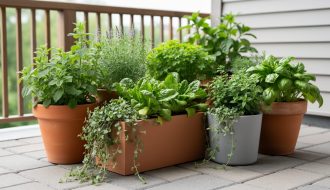
- Plants: Native grasses, creeping thyme, clover lawns, dog-safe container gardens with non-toxic species
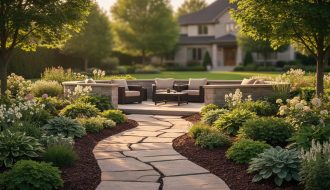
Combining these materials creates zones for different activities. High-traffic areas need durable hardscaping, while softer ground covers work for play zones. Strategic plant placement adds greenery without introducing hazards, and proper edging keeps materials separated and functional.
Critical Safety Considerations Before You Begin
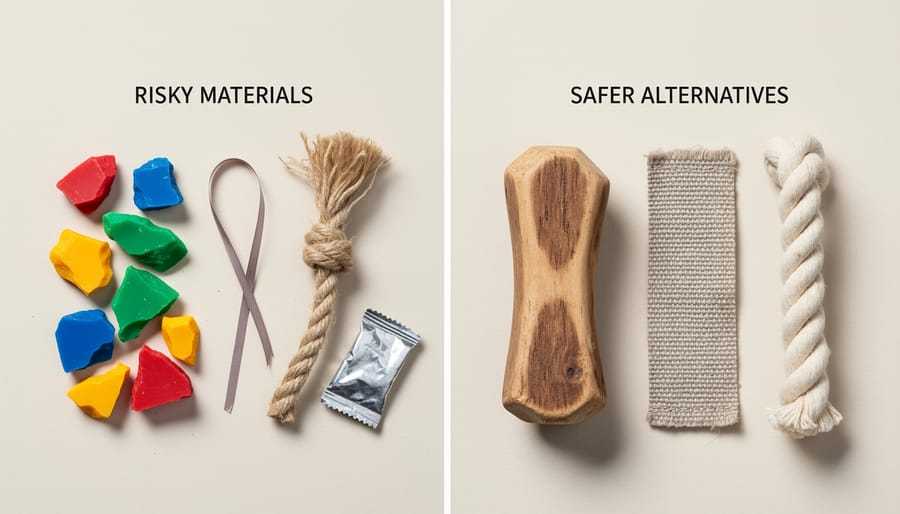
Before selecting any landscaping material for your dog-friendly yard, identify and eliminate hazards that can poison, injure, or discomfort your pet. Many materials marketed for curb appeal pose serious health risks to dogs who explore their environment with their mouths and paws.
Cocoa mulch ranks among the most dangerous ground covers despite its rich color and pleasant smell. It contains theobromine, the same toxin found in chocolate, which causes vomiting, diarrhea, elevated heart rate, seizures, and potentially death when ingested. Dogs find the sweet scent irresistible and will consume it readily. Similarly, treated lumber contains arsenic, chromium, and copper compounds that leach into surrounding soil and can be absorbed through paw pads or ingested when dogs chew fence posts or raised bed edges.
Sharp-edged materials create physical hazards that veterinarians see regularly. Crushed stone with angular fragments cuts paw pads, particularly on active dogs who run and play. Large river rocks with gaps between them trap paws and claws, causing sprains or fractures when dogs jump down from elevated surfaces. Pine bark nuggets splinter into sharp pieces that puncture gums and intestinal walls if swallowed.
Temperature extremes make otherwise safe materials unusable during peak seasons. Black rubber mulch, dark pavers, and metal edging reach surface temperatures exceeding 140°F in direct summer sun, burning paw pads within seconds of contact. Concrete and natural stone also retain heat but remain cooler than synthetic options. Test surfaces with your bare hand before allowing dogs onto them during hot weather.
Drainage failures transform safe materials into hazardous mudpits. Standing water breeds bacteria, creates slipping hazards, and encourages dogs to dig. Any ground cover or hardscaping must slope away from structures and include proper base layers to channel water effectively. Poor drainage also leads to material breakdown, releasing harmful particles into the environment where dogs can ingest them during normal play.
How to Select and Install Dog Friendly Ground Covers
Choosing the Right Ground Cover for Your Dog’s Needs
Selecting the ideal ground cover starts with evaluating your dog’s physical characteristics and behavior patterns. Large, active breeds running at full speed require materials that resist displacement and provide secure footing, decomposed granite compacts into a stable surface that handles heavy paws and sharp turns without scattering. Smaller dogs and less active pets can thrive on softer options like rubber mulch, which cushions joints during play and feels comfortable under sensitive pads.
Digging behavior fundamentally changes your material requirements. Persistent diggers push pea gravel and loose mulches into unwanted areas, creating maintenance headaches and bare spots. For these dogs, artificial turf installed over compacted base layers eliminates excavation rewards while maintaining a clean appearance. If you prefer natural materials, decomposed granite’s compact nature discourages digging more effectively than loose aggregates.
Climate conditions determine long-term comfort and safety. Decomposed granite and pea gravel absorb intense summer heat in hot regions, potentially burning paw pads during midday, reserve these for shaded zones or cooler climates. Rubber mulch stays significantly cooler than stone options, making it suitable for sunny yards in warm areas. Artificial turf quality matters here; premium products with heat-reflective backing prevent surface temperatures that cause discomfort, while budget versions can become dangerously hot.
Consider drainage alongside activity patterns. Heavy rainfall regions need materials that prevent mud formation, pea gravel and decomposed granite drain rapidly, keeping paws clean. Rubber mulch requires proper base preparation to avoid water pooling underneath, which breeds bacteria and odors.
Installing Ground Covers for Durability and Drainage
Proper installation prevents your chosen dog friendly landscaping materials from washing away during storms or turning into a muddy mess after your pets play. The foundation work determines whether your ground cover remains functional and safe for years or requires replacement within months.
Start by excavating the installation area to a depth of 4 to 6 inches. Remove all existing grass, weeds, and organic debris that will decompose and create uneven settling. Compact the exposed soil using a hand tamper or plate compactor, this step prevents future sinking that creates puddles where dogs track in mud.
Install a landscape fabric barrier over the compacted soil. This weed-blocking layer must be permeable to allow drainage while preventing ground covers from mixing with underlying soil. Overlap fabric edges by 6 inches and secure with landscape staples every 2 feet. For decomposed granite or pea gravel, choose a commercial-grade fabric rated for high-traffic areas; cheap options tear when dogs dig.
Add a 2-inch base layer of crushed stone or gravel if drainage is poor. This coarse material channels water away from the surface before it pools. Skip this layer only if your soil drains quickly, test by digging a 12-inch hole, filling it with water, and confirming it drains within 4 hours.
Spread your selected ground cover material to a finished depth of 3 to 4 inches for gravel products, or 2 inches for rubber mulch. Deeper layers feel unstable under paw; shallower ones expose fabric edges that dogs can tear.
Install rigid edging around the perimeter using metal, plastic, or composite borders staked every 3 feet. Edging prevents materials from scattering into lawn areas when dogs run and turn sharply. For areas with persistent diggers, bury edging 4 inches deep rather than surface-mounting it.
Creating Dog Safe Hardscaping Elements
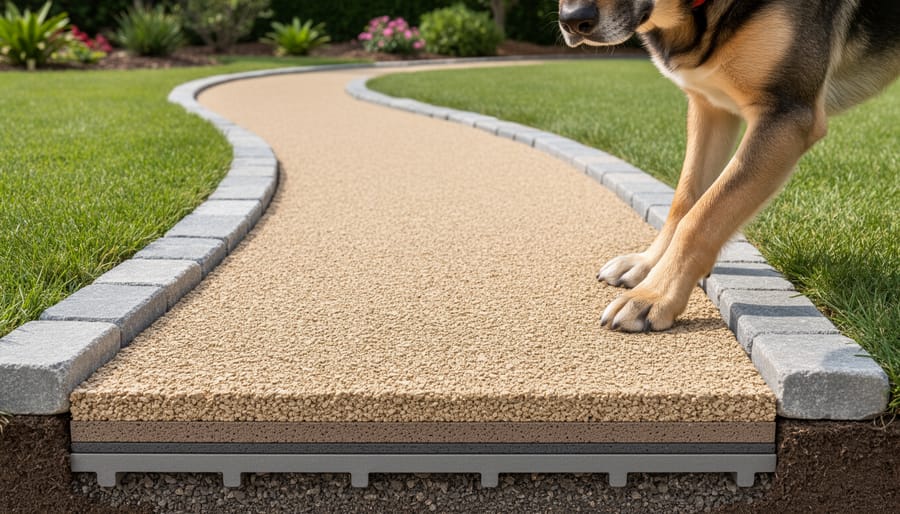
Hardscaping creates the structural foundation of a dog-safe yard, and choosing the right materials prevents paw injuries while eliminating choking hazards. Focus on smooth-surfaced options with minimal gaps where claws can catch or small pieces can break loose.
Natural stone flagstones work well for pathways and patios when you select pieces with honed or thermal finishes rather than rough-cut surfaces. Space flagstones with wide joints filled with decomposed granite instead of small pebbles that dogs might swallow. Flagstone stays cooler than concrete in summer heat, protecting sensitive paw pads during peak sun hours. Choose stones at least two inches thick to prevent cracking under dog activity, and ensure edges are beveled to eliminate sharp corners.
Concrete pavers offer durability and versatility for dog-friendly hardscaping when you avoid textured patterns with deep grooves. Smooth-finished pavers prevent abraded paws while their interlocking design creates stable surfaces that won’t shift under running dogs. Install pavers over a compacted base with polymeric sand in joints, this sand hardens when wetted, preventing dogs from digging it out while maintaining flexibility for drainage. For areas bordering small-space pet plants edge pavers with steel or aluminum trim that sits flush with the surface rather than raised borders that create tripping hazards.
Poured concrete works for large patio areas if you specify a broom finish rather than exposed aggregate. Exposed aggregate contains small stones that can dislodge and create choking risks, while deeply stamped patterns trap dirt and moisture between ridges. A light broom finish provides traction without roughness, and you can add non-toxic colorants to concrete mixes for visual interest without compromising safety.
Avoid river rock, pea gravel smaller than three-eighths inch, and any loose materials in high-traffic hardscaping zones. Dogs frequently mouth these pieces, leading to intestinal blockages. Similarly, skip railroad ties, pressure-treated lumber, and cocoa mulch borders, all contain compounds toxic to dogs. Test installed hardscaping by walking barefoot across surfaces; if sharp edges or uncomfortable textures bother your feet, they will damage your dog’s paws.
Selecting Non-Toxic Mulches and Soil Amendments
Mulch serves dual purposes in dog-friendly yards: it suppresses weeds and retains soil moisture while creating comfortable surfaces for pets. The challenge is finding materials that won’t harm dogs who dig, chew, or ingest pieces during play. Cocoa mulch smells appealing to dogs but contains theobromine, the same toxin found in chocolate, and causes vomiting, seizures, or death if consumed. Never use it in yards where dogs have access.
Cedar and pine bark mulches rank among the safest options because they repel insects naturally without chemical treatments. Shredded cedar breaks down slowly, releases a pleasant scent that deters fleas, and creates a soft landing surface for active dogs. Pine needles work well in acidic-soil gardens and won’t stick to fur like smaller particles do. Both materials allow water to penetrate easily while staying in place better than lightweight alternatives.
Shredded hardwood bark offers another non-toxic choice, though it decomposes faster than cedar and may develop mold in damp climates. Look for undyed versions or confirm the colorant is iron oxide-based rather than chemical dyes. Apply a three-inch layer to prevent weed growth without creating barriers that trap heat against the soil.
Organic compost makes an excellent soil amendment but needs proper curing before dogs contact it. Fresh compost generates heat during decomposition and may contain mold spores that cause respiratory issues. Use fully-aged compost that feels cool to the touch and smells earthy rather than sharp or ammonia-like. Mix it into planting beds rather than leaving it as exposed surface mulch where dogs might eat it directly. Replenish cedar or pine mulch annually as it breaks down, raking it smooth to eliminate uneven spots where water pools or materials clump together.
Testing Your Materials and Ensuring Long-Term Safety
Before your dog explores the newly landscaped areas, walk the entire space yourself and run your hands over ground surfaces to detect any sharp edges, splinters, or protruding hardware. Crouch to dog eye-level and inspect for objects that could pose choking hazards, loose stones smaller than a golf ball, wood chips that could splinter, or gaps where paws might get caught between pavers.
Introduce your dog gradually to new surfaces while you observe their gait and comfort level. Dogs limping, constantly licking their paws, or refusing to walk on certain materials signal a problem, rough textures may be abrading paw pads, or heat retention may make surfaces uncomfortable. Check paws after each session for cuts, redness, or embedded debris.
Monitor for allergic reactions during the first two weeks, watching for excessive scratching, skin inflammation, or gastrointestinal distress if your dog samples new mulch or plants. Remove any material that triggers these symptoms immediately.
Establish a monthly inspection routine: rake through gravel and mulch to redistribute materials and expose hidden hazards, tighten loose edging that dogs might dislodge, and refill low spots where water pools. Seasonal deep-cleans prevent mold growth on organic mulches and remove accumulated waste that degrades materials.
When you plan a pet-safe yard ongoing verification protects your investment and your dog’s health, surfaces that start safe can develop hazards through weather exposure and active use.
Common Questions About Dog Friendly Landscaping Materials
How much more expensive are dog-safe materials compared to standard landscaping options?
Dog-friendly materials typically cost 15-30% more upfront than conventional options, but they prevent costly veterinary emergencies and reduce replacement expenses from damage. Many materials like decomposed granite and natural stone offer comparable pricing to traditional choices while providing better durability against dog traffic.
How often do dog-friendly materials need maintenance or replacement?
Most properly installed materials require minimal quarterly maintenance, raking ground covers, checking for displaced pieces, and replenishing mulch as needed. High-traffic areas may need annual top-dressing, while hardscaping elements last decades with basic cleaning.
What should I do if my dog ingests landscaping material?
Contact your veterinarian immediately if ingestion occurs, noting the material type and approximate quantity consumed. Keep packaging or photos of the material to help identify potential toxins, and monitor for symptoms like vomiting, lethargy, or difficulty breathing while seeking professional guidance.
Can I find these materials at Canadian garden centers?
Most dog-safe materials are readily available at major Canadian retailers like Home Depot, Lowe’s, and regional landscape supply yards. Specialty items like rubber mulch or specific non-toxic plants may require ordering from dedicated pet-safe landscaping suppliers or online vendors serving Canada.
For persistent diggers who tear up ground covers and destroy carefully planned layouts, raised beds and containers for digging dogs redirect destructive energy while protecting root systems. Designating a specific digging zone filled with soft sand or loose soil gives dogs an approved outlet, preserving the rest of your landscape. Seasonal temperature shifts present unique challenges, materials that stay cool underfoot during summer heat waves protect paw pads, while winter ice management requires pet-safe deicers instead of toxic rock salt on hardscaping surfaces.
Transitioning an existing landscape to dog-safe alternatives doesn’t require complete removal and replacement. Start by addressing high-traffic zones where your dog spends most outdoor time, then gradually phase out hazardous materials as budget allows. A custom dog-friendly design consultation identifies priority areas and creates a phased implementation plan that spreads costs across multiple seasons while immediately eliminating the most dangerous elements from your yard.
Selecting dog friendly landscaping materials means you never have to choose between a beautiful yard and your pet’s wellbeing. When you invest in non-toxic ground covers, safe hardscaping, and pet-appropriate mulches from the start, you eliminate the emergency vet visits that come from ingested cocoa mulch, burnt paw pads on hot stone, or puncture wounds from sharp gravel. These materials work harder for your landscape because they’re designed to withstand the wear patterns dogs create naturally.
The science behind material toxicity isn’t guesswork. Certain compounds in popular landscape products trigger serious health reactions in dogs, while others create physical hazards that develop over time as materials break down or shift. Understanding these mechanisms lets you build outdoor spaces where dogs can dig, run, and explore without constant supervision or restriction.
Professional landscape designers who specialize in pet-friendly installations bring technical knowledge about drainage integration, material longevity under paw traffic, and climate-specific solutions that generic advice misses. They balance the artistic elements you want with the safety requirements your dog needs, creating yards that function as true extensions of your home rather than compromise zones. Consulting with these specialists before major installations saves money and protects the family members who experience your landscape most intensely.